
Area 01 of 6
Nature Integrity Method™
A methodology to make change in nature visible.
Nature changes differently in each ecosystem. Understanding those changes —and demonstrating the results of conservation and restoration actions— requires a framework that combines scientific rigor, consistency and adaptation to context.
Nature Integrity Method™ (NIM) provides that framework: a scientific methodology to assess the condition of ecosystems and track how it evolves over time through standardized, transparent and reproducible measurements.
Its aim is to generate robust, verifiable evidence on the results achieved by conservation and restoration projects.
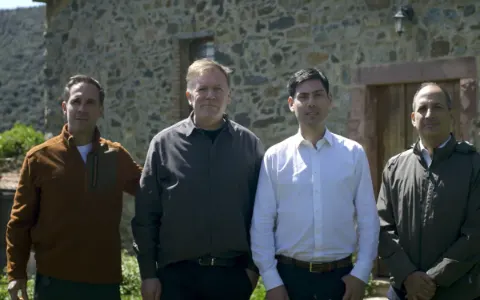
Video: Nature Integrity Method™ in practice.
Biodiversity
Biodiversity cannot be explained with a single measure.
Each ecosystem brings together its own species, habitats and ecological relationships. Understanding its condition therefore requires observing different dimensions and selecting indicators that can reflect the relevant changes in each context.
NIM organizes this complexity through two complementary components:
Biological composition
Observes the condition of representative biological groups in the ecosystem and the changes they undergo.
Ecosystem structure
Assesses habitat characteristics that reveal its structural condition and how it evolves.
Indicators are selected according to the characteristics of each ecosystem and the project’s objectives, within a common methodological architecture that allows results to be assessed consistently over time.
ECOSYSTEM CONDITION SCORE (ECS)
A common measure for different ecosystems.
How can we know whether the condition of an ecosystem is holding, improving or deteriorating?
NIM brings together information on biological composition and structure in the Ecosystem Condition Score (ECS), a measure that assesses the condition of an ecosystem against an ecological reference and tracks how it evolves over time.
Each ecosystem is assessed with indicators suited to its characteristics, but under a common methodology. In this way, NIM turns different types of ecological information into consistent, verifiable results.
Conservation and restoration
Conserving and restoring do not mean measuring the same thing.
In a conservation project, the goal is to maintain the condition of the ecosystem. NIM makes it possible to assess whether that condition holds over time, using its documented state at the start of the project as the reference.
In a restoration project, the goal is to recover the condition of a degraded ecosystem. NIM measures the change achieved against a reference ecological condition, making it possible to demonstrate progress in its recovery.
Retention
Maintain the condition
Restoration
Recover the condition

MONITORING, REPORTING AND VERIFICATION (MRV)
Measuring is only the beginning.
To demonstrate results, information must be traceable, comparable and verifiable over time.
NIM sets up a monitoring, reporting and verification (MRV) system that defines what is measured, how data are collected and analyzed, how often and under what quality controls.
Tools are selected according to the characteristics of each ecosystem and may combine fieldwork, camera traps, bioacoustics, environmental DNA (eDNA), remote sensing and other observation and analysis technologies. Their role is to expand our capacity to observe nature, always under scientific criteria and documented, reproducible methods.
- Observe
- Measure
- Monitor
- Verify
- Demonstrate
Integrity
Integrity goes beyond measurement.
Measuring a change in nature is not enough. For a result to be robust, it must also be attributable to the project’s actions, last over time and be backed by appropriate safeguards and governance mechanisms.
NIM incorporates criteria of additionality, permanence, risk and leakage management, local stakeholder participation, environmental and social safeguards, transparency and independent verification, within the applicable Cercarbono framework.
-
Evidence
-
Traceability
-
Safeguards
-
Governance
-
Verification
Trust
From evidence to more reliable decisions.
NIM seeks to make change in nature understandable and verifiable without reducing the complexity of ecosystems.
By providing a common scientific basis to assess conservation and restoration results, it helps strengthen trust in projects, their monitoring and the decisions that depend on them.
Discover the methodologyComing soon
Next area
Let’s work together
Let's make nature visible in the decisions that shape our future.
We work with organizations that want to better understand their relationship with natural systems and contribute to the development of rigorous, fair and scalable environmental solutions.